
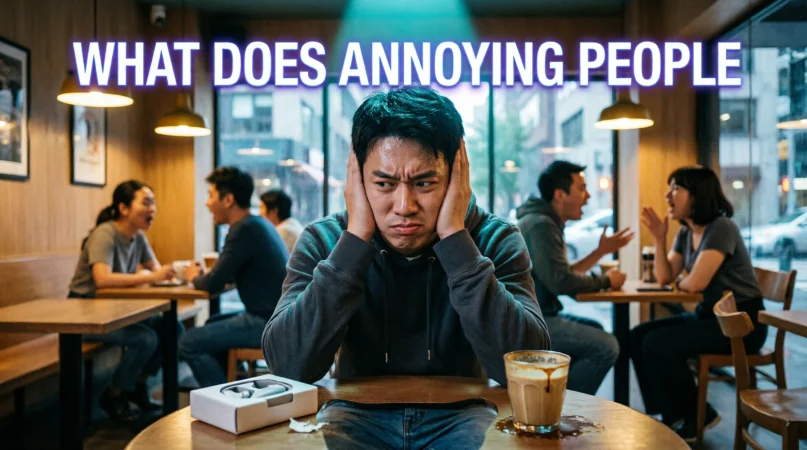
Dealing with an annoying person can test anyone’s patience. Sometimes someone keeps interrupting you. Sometimes they won’t stop teasing you. Other times, they send the same message five times, ask the same question repeatedly, or somehow turn a five-minute conversation into a full debate.
And then there are those moments when you have the perfect comeback in your head but you think of it three hours later. That’s where a witty response can help. A good comeback doesn’t have to be cruel or insulting. Often, the funniest responses are short, clever, and confident enough to shut down unnecessary behavior without starting a bigger argument.
If you’re searching for annoying people comebacks and witty responses, this guide has plenty of options for different situations. You’ll find funny replies, sarcastic lines, clever responses, savage-but-not-too-harsh comebacks, and polite answers for situations where you want to set a boundary without being rude. The goal isn’t to hurt someone. It’s to handle annoying behavior with a little humor, confidence, and self-control.
What Is a Good Comeback for an Annoying Person?

A good comeback is usually short, natural, and appropriate for the situation.
You don’t need a complicated insult that sounds like it came from a movie script.
Sometimes the best response is simply:
“Are you finished?”
Or:
“That was certainly a choice.”
Or:
“I appreciate your commitment to being annoying.”
These lines work because they point out the behavior without turning the conversation into a personal attack.
The right comeback can also depend on your relationship with the person.
A close friend may enjoy a sarcastic roast.
A coworker probably needs a more professional response.
A stranger may simply deserve no response at all.
Knowing when to joke—and when to walk away—is part of having a genuinely good comeback.
30+ Funny and Witty Comebacks for Annoying People
Here are some responses you can use when someone is getting on your nerves.
1. “Are you always this entertaining, or is today special?”
This works especially well when someone is being unnecessarily difficult.
It’s sarcastic without being extremely aggressive.
2. “I admire your confidence.”
The trick here is that you’re not actually saying what you admire.
It leaves the meaning hanging in the air.
Use it with someone who understands sarcasm.
3. “You really woke up and chose chaos today.”
A playful response when someone is deliberately pushing your buttons.
It’s particularly good for friends.
4. “That sounds like a you problem.”
Short, classic, and effective.
It’s best when someone is trying to make their problem your responsibility.
5. “Interesting. Anyway…”
This is one of the easiest ways to end a pointless conversation.
You acknowledge what they said without giving them much attention.
6. “Thanks for the update nobody requested.”
A sharper option for someone who constantly gives unwanted opinions.
Use it carefully because it can sound dismissive.
7. “You’re very committed to this conversation.”
This is funny when someone simply refuses to let a topic go.
It subtly tells them they’ve been talking for too long.
8. “I would agree with you, but then we’d both be wrong.”
This is an old-school comeback, but it still works when used sparingly.
Don’t use it every five minutes or it loses its effect.
9. “Do you have a point, or are we just sightseeing?”
A playful way to ask someone to get to the point.
It works particularly well when somebody has been talking in circles.
10. “That’s enough internet for you today.”
Perfect for someone saying something ridiculous online.
It’s light enough for a comment section or group chat.
11. “Please continue. I’m taking notes.”
This sounds polite on the surface but is clearly sarcastic.
It’s especially funny when someone is making an unnecessarily dramatic argument.
12. “I didn’t realize this was a podcast.”
Use this when someone has been talking nonstop.
It works best with friends or people who appreciate teasing.
13. “You have a lot to say for someone who asked me.”
This one is slightly sharper.
It’s useful when someone asks for your opinion and then argues with every answer.
14. “I’m going to pretend I didn’t hear that.”
Sometimes you don’t need to engage.
This line gives you an easy exit.
15. “Your enthusiasm is noted.”
This is a wonderfully dry response.
It doesn’t give the annoying person much emotional reaction, which is often exactly what they don’t expect.
16. “That’s one way to look at it.”
A polite-sounding response with plenty of room for sarcasm.
You can use it when you strongly disagree but don’t want to start an argument.
17. “I see you’ve brought your opinions again.”
Good for a friend who always has something to say.
The word “again” does most of the work.
18. “Congratulations. You have successfully confused everyone.”
A funny response when someone makes a conversation unnecessarily complicated.
19. “Can we fast-forward this part?”
A simple way to communicate that you’re losing patience.
20. “I need a minute to recover from that.”
Perfect for an especially ridiculous statement.
It can also be used playfully when someone tells a terrible joke.
21. “You really thought that was going to work?”
Use this when someone tries an obvious trick or excuse.
22. “Bold of you to say that out loud.”
This has become a useful internet-style response because it can fit many situations.
It doesn’t directly insult the person, but the message is clear.
23. “I respect the confidence, not the argument.”
A clever option when someone is extremely confident while making little sense.
24. “I’m impressed by your dedication to missing the point.”
This is sharper but still focused on the argument rather than the person.
25. “We could keep doing this, but I’d rather not.”
This is an excellent response when you want the conversation to end.
It establishes a boundary without needing an insult.
26. “That’s enough excitement for one conversation.”
A playful exit when someone is being overly dramatic.
27. “I think we’ve officially beaten this topic to death.”
Useful when someone keeps repeating the same argument.
28. “You make a strong case for silence.”
This one is definitely sarcastic.
Save it for situations where the relationship can handle a stronger joke.
29. “I’m not ignoring you. I’m choosing peace.”
This is a modern, calm way of saying you don’t want to participate.
30. “You win. I don’t want to play anymore.”
This is surprisingly effective because it refuses to continue the argument.
31. “I’m going to let you think about that one.”
A calm response when someone says something questionable.
It also gives you an opportunity to leave the conversation.
32. “That was certainly a sentence.”
One of the most versatile sarcastic responses.
It works when someone says something confusing, dramatic, or completely unnecessary.
Funny Comebacks for Friends Who Won’t Stop Annoying You
Friends are a different story.
If someone you genuinely like is being annoying, you can usually be more playful because there’s already trust between you.
Try:
“You’re lucky I like you.”
“I tolerate you because I’m emotionally invested at this point.”
“Please stop. My patience has left the chat.”
“You’re becoming my favorite reason to use the mute button.”
“I liked you better five minutes ago.”
“You’re testing a friendship that has survived worse.”
“Do you ever take a day off from being annoying?”
“I would block you, but who else would I bother?”
These responses communicate that you’re annoyed without necessarily creating real tension.
Sarcastic Responses for Someone Who Keeps Talking
Some people don’t know when a conversation is over.
They answer every question with a ten-minute story.
They add details nobody asked for.
Then they somehow circle back to the beginning.
If that sounds familiar, try:
“Please don’t let the short version stop you.”
“Take your time. I wasn’t going anywhere.”
“I love the director’s cut.”
“Was there a shorter version?”
“I think we all aged a little during that story.”
“I asked one question, but I respect the full documentary.”
These are humorous rather than genuinely hostile, making them better for casual situations.
Witty Responses for Someone Who Repeats Themselves
When someone keeps repeating the same point, don’t repeat your frustration.
Instead, try:
“Yes, the first three times were memorable.”
“Don’t worry, we’ve heard you.”
“The message has been received.”
“I think the point has officially arrived.”
“You don’t have to put it on repeat.”
“I understood you the first time.”
If the person continues after you’ve already answered, a straightforward response may work better:
“I’ve already answered that, and my answer hasn’t changed.”
That’s not funny, but it is clear.
And sometimes clarity is more effective than sarcasm.
Savage but Funny Comebacks
Sometimes you want something with a little more bite.
The key is to make the line clever rather than cruel.
Try:
“Your confidence is doing a lot of heavy lifting.”
“You have an impressive ability to complicate simple things.”
“I could explain it again, but I don’t think additional words will help.”
“You’re not wrong about everything. Just this.”
“I would take you seriously, but you’re making it difficult.”
“That’s an interesting opinion for someone with so little evidence.”
“You’re making a strong argument for changing the subject.”
These are more pointed, so use them when the situation calls for them.
Polite Comebacks for Annoying People
Not every annoying person deserves a savage response.
Maybe you’re at work.
Maybe you’re dealing with a difficult customer.
Maybe it’s a family member.
Or perhaps you simply don’t want unnecessary drama.
In those situations, try calm responses like:
“I understand what you’re saying, but I don’t agree.”
“I’d rather not discuss this further.”
“Let’s move on.”
“I think we’ve covered this already.”
“I appreciate your opinion.”
“I’m going to leave it there.”
“Let’s keep the conversation respectful.”
“I don’t think continuing this is productive.”
These aren’t technically “comebacks,” but they’re often much more effective than insults.
They make your boundary clear without giving the other person ammunition.
Comebacks for Someone Who Constantly Interrupts
Being interrupted repeatedly is frustrating.
Instead of interrupting them back, you can calmly say:
“I’d like to finish my sentence.”
“Give me one second to finish.”
“I’ll hear you out when I’m done.”
For a more playful approach:
“My sentence wasn’t finished loading.”
“Please allow the speaker to complete the episode.”
“One at a time—we’re not auctioning sentences.”
If the interruptions happen at work or in a serious discussion, choose the direct version.
Humor isn’t always necessary when a simple boundary will solve the problem.
Comebacks for Someone Who Keeps Asking the Same Question
Repeated questions can become exhausting.
Try:
“Same answer as before.”
“Nothing has changed since the last time you asked.”
“You may want to write this one down.”
“I admire your commitment to getting the same answer.”
“Do you think my answer is going to update itself?”
That last one is more sarcastic, so use it with someone who can handle the joke.
Comebacks for Someone Who Gives Unwanted Advice
Everyone knows someone who has a solution for everything.
You mention you’re tired.
They have a five-step plan.
You mention a problem.
They suddenly become an expert.
A few possible responses:
“Thanks. I’ll add that to the suggestions I didn’t request.”
“I appreciate the enthusiasm.”
“I’ll keep that in mind.”
“Thanks, but I’ve got this.”
“If I need advice, I’ll ask.”
That last one is direct and is probably the best option if the behavior keeps happening.
Comebacks for Online Trolls
Internet arguments are rarely worth your energy.
Someone may deliberately provoke you simply because they want a reaction.
In those situations, the funniest comeback may actually be no comeback.
But if you want to respond once and move on, try:
“Thanks for stopping by.”
“Hope your day gets better.”
“That’s certainly an opinion.”
“I’ll give that the attention it deserves.”
“Anyway…”
Or simply:
“Mute button activated.”
Remember that trolls often want attention. A long emotional argument gives them exactly what they’re looking for.
Comebacks for a Person Who Won’t Leave You Alone
This is where humor should take a back seat if the behavior becomes persistent.
You can say:
“I need some space right now.”
“Please stop messaging me.”
“I’m not interested in continuing this conversation.”
“I’ve asked you to stop. Please respect that.”
If someone ignores a clear boundary, you don’t owe them a witty response.
Blocking, muting, leaving the conversation, or getting help may be more appropriate.
A comeback is entertainment.
A boundary is protection.
Don’t confuse the two.
Why Short Comebacks Usually Work Better
One mistake people make is trying too hard.
A long comeback can turn into a speech.
And once you’re explaining your joke, you’ve already lost some of its impact.
Compare:
“I really don’t understand why you continue to behave this way because I’ve already explained my position several times…”
with:
“We’ve covered this.”
The second is stronger because it’s simple.
Good comebacks often work because they leave space for the other person to think about what you said.
You don’t need to win every conversation.
Sometimes you just need to stop participating in it.
How to Be Funny Without Being Mean
There’s a difference between roasting someone’s behavior and attacking their identity.
For example:
“You really love hearing yourself talk.”
focuses on behavior.
But:
“You’re stupid.”
is simply an insult.
The first can potentially be playful.
The second usually adds nothing.
If you want your comeback to sound clever rather than childish, target the situation, contradiction, or behavior—not someone’s appearance, background, intelligence, or personal vulnerabilities.
That’s especially important online, where tone is easy to misunderstand.
The Best Comeback Is Sometimes No Comeback
This might sound strange in an article about witty responses, but it’s worth saying.
You don’t have to respond to every annoying person.
Silence can be incredibly effective.
If someone wants an emotional reaction and you don’t give them one, the conversation often loses its momentum.
You can leave them on read.
You can change the subject.
You can mute the chat.
You can walk away.
You can simply say:
“I’m not doing this.”
That’s not weakness.
It’s knowing when your attention is more valuable than the argument.
How to Choose the Right Response
Before sending a witty comeback, ask yourself three quick questions.
Is this person joking?
If yes, a playful response is probably fine.
Could this hurt the relationship?
If yes, choose something softer.
Do I actually want this conversation to continue?
If no, don’t give them a comeback that invites another ten messages.
This last question is particularly important.
Some witty replies are so effective that they encourage the other person to keep arguing.
If your goal is to end the interaction, choose a closing statement instead.
Funny One-Liners for Quick Replies
Need something short enough to send immediately?
Try these:
- “Bold choice.”
- “Interesting strategy.”
- “Good luck with that.”
- “You tried.”
- “Noted.”
- “That’s adorable.”
- “Anyway…”
- “Moving on.”
- “I’m choosing peace.”
- “We done?”
- “Fascinating.”
- “What a time to be alive.”
- “I’ll pretend I didn’t hear that.”
- “You really said that with confidence.”
- “Let’s not make this a thing.”
These are useful because they’re flexible.
You can use them in texts, group chats, comments, or face-to-face conversations depending on the situation.
Frequently Asked Questions
What is a good comeback for an annoying person?
A simple option is:
“Are you finished?”
If you want something more playful, try:
“You really committed to being annoying today.”
The best choice depends on how well you know the person.
What is a savage comeback without being too rude?
Try:
“Your confidence is doing a lot of heavy lifting.”
It makes the point without relying on profanity or personal insults.
What can I say to someone who won’t stop talking?
You could say:
“I asked for the short version, but I respect the director’s cut.”
For a more serious situation, simply say:
“I need to move on now.”
What is a funny response to someone annoying you?
“You really woke up and chose chaos today.”
It’s playful enough for friends and casual conversations.
How do I shut down an annoying person politely?
Use a clear boundary:
“I don’t want to continue this conversation.”
You don’t need to insult someone to make your position clear.
Should I use savage comebacks online?
Use caution.
Online conversations lack facial expressions and vocal tone, so sarcasm can easily be misunderstood. If someone is deliberately trolling you, ignoring or muting them may be more effective.
What is the best comeback when someone keeps repeating themselves?
Try:
“I understood you the first time.”
Or, for a more sarcastic version:
“You don’t have to put it on repeat.”
How can I make my own witty comeback?
Pay attention to the situation rather than memorizing insults.
Point out the contradiction, exaggerate something funny, or calmly state what everyone is already thinking.
The shorter and more natural it sounds, the better.
Final Thoughts
Having a clever response ready can make annoying situations a little easier to handle, but the goal shouldn’t be to win every exchange. The strongest comebacks are often the ones that keep your confidence intact without creating unnecessary drama. Whether you choose a funny one-liner, a sarcastic remark, or a calm boundary, pick something that fits the person and the situation.
And remember: you don’t have to answer every annoying person. Sometimes the smartest response is to laugh, change the subject, mute the conversation, or simply walk away. Your peace is worth more than the perfect comeback.

Carter Blake is a content writer who specializes in social media replies, internet slang meanings, and online communication. He creates simple and helpful guides for everyday users to improve their texting and digital communication skills.